How Long Should an Instagram Caption Be?
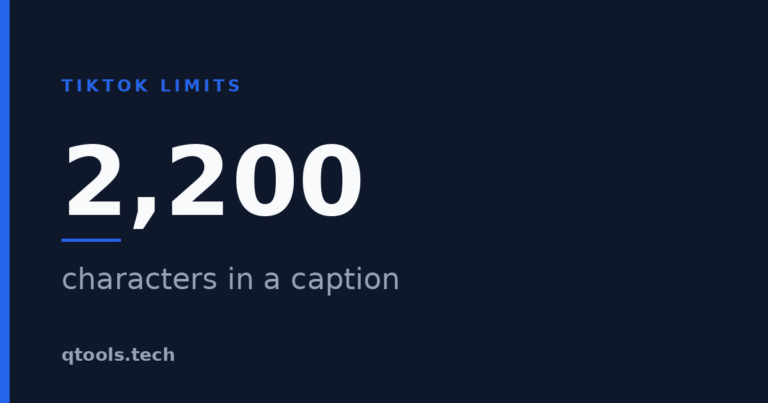
Instagram allows 2,200 characters in a caption. Almost nobody should use them.
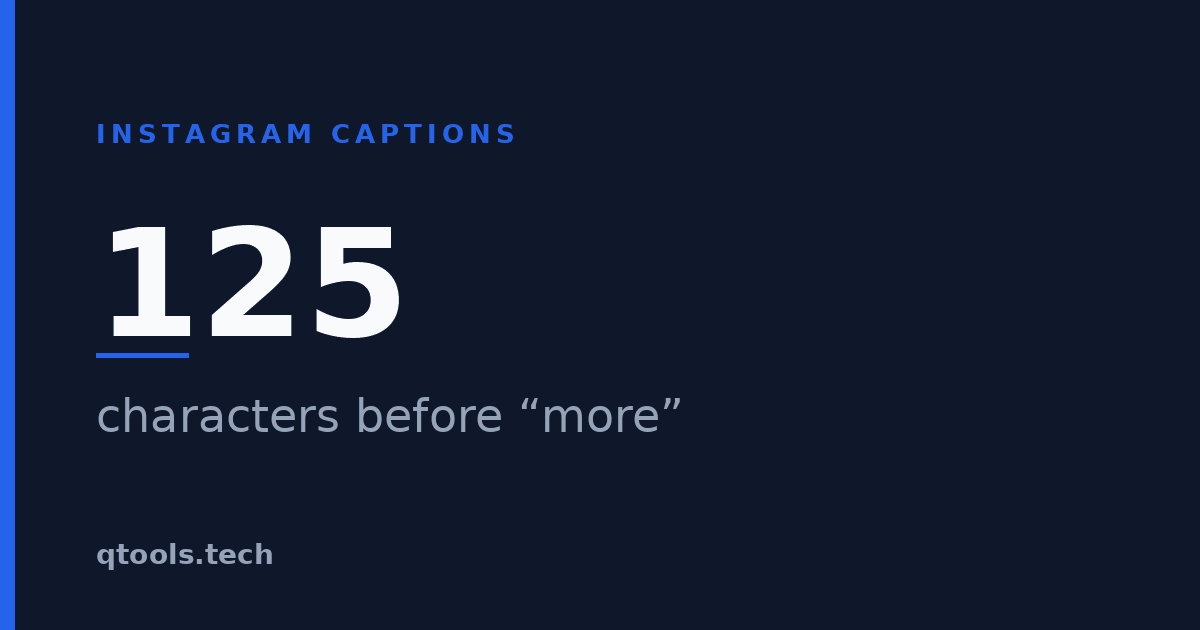
Only the first 125 characters or so appear in the feed before Instagram cuts the text off behind a “more” link. Everything past that point is read by the small fraction of people who tapped to expand — so the opening line is, for most viewers, the entire caption.
The numbers that actually matter
| Field | Limit |
|---|---|
| Caption — maximum | 2,200 characters |
| Caption — visible before “more” | ~125 characters |
| Hashtags per post | 30 |
| Bio | 150 characters |
| Comment | 2,200 characters |
The truncation point is not exact. Instagram cuts based on available space, so a caption with line breaks or wide characters gets clipped earlier. Treat 125 as a ceiling, not a guarantee — and check your exact count with the character counter before you post.
So how long should a caption be?
It depends on what the post is doing, and there are really only three useful lengths.
| Length | Best for | Why it works |
|---|---|---|
| Under 125 chars | Most posts | Nothing truncates; reads as one clean unit |
| 125–300 chars | Tips, context, a call to action | Hook survives truncation, payoff rewards the tap |
| 500–1,500 chars | Stories, lessons, explanations | Reading time counts as engagement |
What almost never works is the middle-length caption with nothing to say — 400 characters of filler that neither reads cleanly in the feed nor rewards the tap to expand.
Write the first line as if it were the whole caption
This is the single highest-leverage habit. Your first 125 characters have one job: be complete enough to stand alone, and interesting enough that expanding feels worth it.
Things that work in that opening line: a specific claim, a question the reader wants answered, a number, or the surprising half of your point. Things that waste it: greetings, “Happy Monday everyone!”, emoji strings, and any sentence that only makes sense once you have read the rest.
A useful test — read only your first line back. If it tells the reader nothing, rewrite it before touching anything else.
Line breaks and where hashtags go
Instagram collapses caption text into a dense block, which is hard to read on a phone. Line breaks fix this, but they also count toward the visible space, so a caption that opens with three blank lines wastes most of its truncation budget.
Put a break after your hook line, then keep paragraphs to two or three lines each.
Hashtags belong at the end of the caption or in the first comment. Both work equally well for reach — Instagram has confirmed there is no ranking difference. Keeping them out of the opening line is what matters, because thirty hashtags at the top will consume your entire visible caption before the reader sees a single word of it.
Why emoji break your character count
| Emoji type | Counts as |
|---|---|
| Standard emoji (🙂 🔥 ✅) | 2 characters |
| Skin-tone variant (👍🏽) | 4 characters |
| Flag (🇩🇿) | 4 characters |
| Family / compound (👨👩👧👦) | 7+ characters |
This is why a caption that looks well under the limit can still get rejected, and why counting in a notes app gives you the wrong number. The counter linked above measures emoji the way the platforms actually do.
Frequently asked questions
What is the Instagram caption character limit? 2,200 characters, with roughly the first 125 visible before the “more” link.
Do longer captions get more reach? Not directly. Length is not a ranking factor. What helps is dwell time — if a long caption genuinely holds attention, that signal helps. A long caption nobody finishes does not.
Is the limit different for Reels? No. Reels captions use the same 2,200-character limit, though less of it is visible in the feed because the video occupies more of the screen.
Can I edit a caption after posting? Yes, without limit and without affecting the post’s performance. Fixing a typo an hour later costs you nothing.
How many hashtags should I use? The cap is 30, but most accounts see no benefit past 5 to 10 relevant ones. Relevance beats volume — thirty loosely related tags mostly attract the wrong audience.