How Much Is the Monthly Payment on a $300,000 Mortgage?
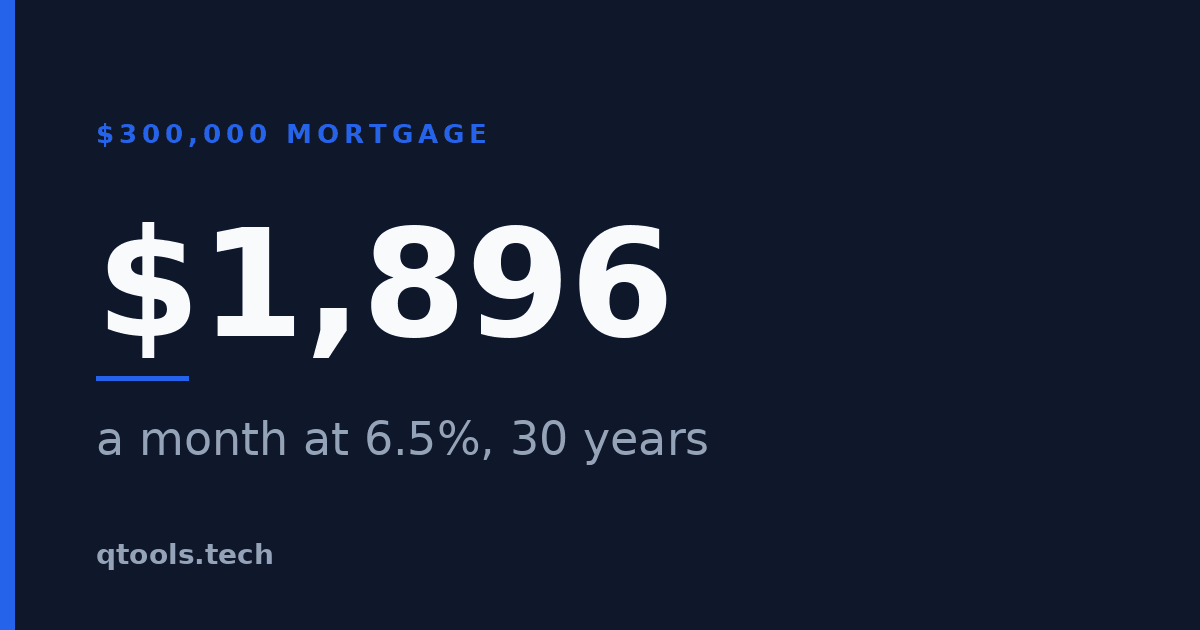
At a 6.5% interest rate over 30 years, the principal and interest on a $300,000 mortgage comes to about $1,896 per month. Add property tax and insurance and the realistic total lands closer to $2,300 to $2,500.
That gap between the two numbers is where most first-time buyers get caught out. The figure a lender quotes is usually principal and interest only. The figure that leaves your bank account every month includes several other things.
Monthly payment by interest rate
Principal and interest on a $300,000 loan over 30 years:
| Interest rate | Monthly payment | Total interest paid |
|---|---|---|
| 5.0% | $1,610 | $279,800 |
| 5.5% | $1,703 | $313,200 |
| 6.0% | $1,799 | $347,500 |
| 6.5% | $1,896 | $382,600 |
| 7.0% | $1,996 | $418,500 |
| 7.5% | $2,098 | $455,200 |
| 8.0% | $2,201 | $492,500 |
Notice how much a single percentage point costs: moving from 6% to 7% adds nearly $200 a month, which is about $71,000 over the full term. This is why shopping several lenders is worth real effort even when the rate difference looks small.
To run your own loan amount, rate, and term, use the home loan calculator — it includes tax and insurance so you see the full payment rather than just principal and interest.
What actually makes up the payment
A typical monthly mortgage payment has four parts, often abbreviated PITI:
| Component | Typical monthly cost | Notes |
|---|---|---|
| Principal & interest | $1,896 | At 6.5% over 30 years |
| Property tax | $200–$600 | Varies enormously by state |
| Homeowners insurance | $100–$250 | Higher in storm or wildfire areas |
| PMI (if under 20% down) | $100–$250 | Removable at 20% equity |
Early in a 30-year loan, the principal portion is surprisingly small. On that $300,000 loan at 6.5%, the first payment puts roughly $271 toward principal and $1,625 toward interest. You can see the full breakdown in the amortization schedule calculator.
How the loan term changes things
| Term | Monthly payment | Total interest | Saved vs 30-year |
|---|---|---|---|
| 30 years | $1,896 | $382,000 | — |
| 20 years | $2,237 | $237,000 | $145,000 |
| 15 years | $2,613 | $170,000 | $212,000 |
The 15-year loan costs $717 more each month but saves over $212,000 in interest. Whether that trade makes sense depends on what else that $717 could do — for some people paying down higher-interest debt or investing it works out better, for others the guaranteed saving and faster ownership is worth more. There is no universally right answer here.
What you need to earn to afford it
Lenders generally want your total housing payment at or below 28% of gross monthly income, and all debt payments below about 36%.
Working backwards from a $2,400 total payment, that implies gross income of roughly $8,600 a month, or about $103,000 a year. If you carry a car loan or student loans, you need more, because those count toward the 36% figure.
These are lender thresholds, not comfort thresholds. Plenty of people are approved for payments that leave them with very little margin. Approval tells you what a bank will lend, not what you can live with.
Costs the monthly payment does not include
| Cost | Amount | When |
|---|---|---|
| Down payment (20%) | $60,000 | At closing |
| Closing costs (2–5%) | $6,000–$15,000 | At closing |
| Maintenance (1%/year) | ~$250/month | Ongoing, unpredictable |
Maintenance is the one people forget, because it does not arrive as a monthly bill — right up until the water heater fails.
Frequently asked questions
How much is a $300,000 mortgage per month? About $1,896 in principal and interest at 6.5% over 30 years, or roughly $2,300 to $2,500 once tax and insurance are included.
How much do I need to earn? Around $103,000 a year using the standard 28% rule, more if you have other debt payments.
How much is the down payment? Conventional loans typically want 20% ($60,000) to avoid PMI, though many programs allow 3% to 5%. A smaller down payment means a larger loan and a PMI charge on top.
Can I pay it off early? Usually yes. On this loan, an extra $200 a month cuts about seven years off the term and saves roughly $103,000 in interest. Check your loan documents for prepayment penalties first — they are uncommon but not extinct.
Should I choose a 15-year or 30-year loan? The 15-year saves far more interest; the 30-year keeps monthly obligations lower and leaves more cash free. Which is better depends on your income stability, other debts, and what else you would do with the difference.
These figures are estimates for planning purposes. Your actual payment depends on your credit, location, lender, and loan program — talk to a mortgage broker or lender for numbers specific to your situation.